
As a rancher’s daughter growing up in Central Texas, I loved the very thought of rain. It made my mother’s garden green and meant water in the tanks, hay for the cattle, and, in lean times of drought, money in the bank. I can remember one evening during a particularly long dry spell when a loud clap of thunder had us bolting out the front door to see and taste and smell the glorious droplets coming down from the sky. What joy and relief to stand on the porch and savor the spectacular show, complete with special sound and lighting effects courtesy of Mother Nature.
It’s understandable, then, that MGM’s 1952 “Singin’ in the Rain” was, and remains, my favorite movie. I could watch Gene Kelly joyfully dancing through the puddles, umbrella in hand and singing for dear life, a thousand times and never grow tired of it.
Fast forward a few decades, and those warm and fuzzy rain-related memories of my childhood seem to grow dimmer by the day. In fact, I’d venture to say I’m not alone in having a love-hate relationship with precipitation after a particularly wet spring here in hot, humid southeast Texas. The month of May, for example, was marked by flash floods, tornados and other extremes that wreaked havoc across the state. On May 16, Houston experienced a derecho, something I had never heard of but quickly learned means “straight ahead” in Spanish. It’s a windstorm that can be as destructive as a hurricane or tornado — except that instead of spiraling downward, a derecho barrels through in straight lines. The mid-May derecho brought hurricane-force winds and caused severe property damage, extended power outages, severe injuries and death. Many residents and business owners lost everything.
Though we are thankful to have been spared such despair, I certainly wasn’t feeling the love during a heavy thunderstorm on May 2 when, in an attempt to drive the 30-plus miles to the Texas Medical Center with my husband for his scheduled Achilles tendon surgery, we drove through high waters and stalled out at a busy intersection. As cars maneuvered around us and I prayed we wouldn’t be hit, the engine eventually coughed and sputtered and started again. But with reports online of high waters farther ahead, we realized we wouldn’t be making it to the hospital that day. We called to reschedule and, as the rains began to let up, the waters receded enough so that we could get safely home, albeit with no power.
That weekend, as I pulled out my credit card to pay the six-digit repair bill, my service manager reminded me how lucky I was that my car wasn’t totaled, as opposed to other customers who weren’t so fortunate.
Sure, I’ve been counting my blessings, but it’s been hard to maintain a “violets for the soul” outlook lately, despite the occasional break in the clouds, the buzz of a hummingbird or the cheery pink bloom of a rain lily.
Over the past few weeks I’ve lost count of the number of days we’ve dealt with downpours, deluges and the like. Since the surgery, we’ve been relatively homebound and grateful for the love and concern of friends and family. Still, as recovery progresses relatively smoothly, it’s been an unsettling time as we continue to see reports of extreme weather across the country and remind ourselves that hurricane season is just getting started. The National Weather Service predictions for 2024 are not encouraging.
And, figuratively speaking, the skies have seemed even darker as we’ve ached for friends, family and former co-workers over news of serious health diagnoses, sudden loss of loved ones and the long goodbyes of terminal illness.
As per usual, last week’s forecast called for — you guessed it — rain. On Wednesday, as predicted, it began around 9 a.m., as I was volunteering in the church parking lot, helping children out of their cars to attend a summer program. It continued to rain steadily, but not heavily, through the afternoon. Suddenly, around 3, the wind whipped up and my husband and I heard a gentle “thud.” Must have been the tarp flapping on the patio, we thought.
Something in the back of the house occupied my attention until about a half-hour later, when my husband called my name. I hurried to offer help and thought I must certainly have misunderstood. Did he just say the crape myrtle had fallen down?
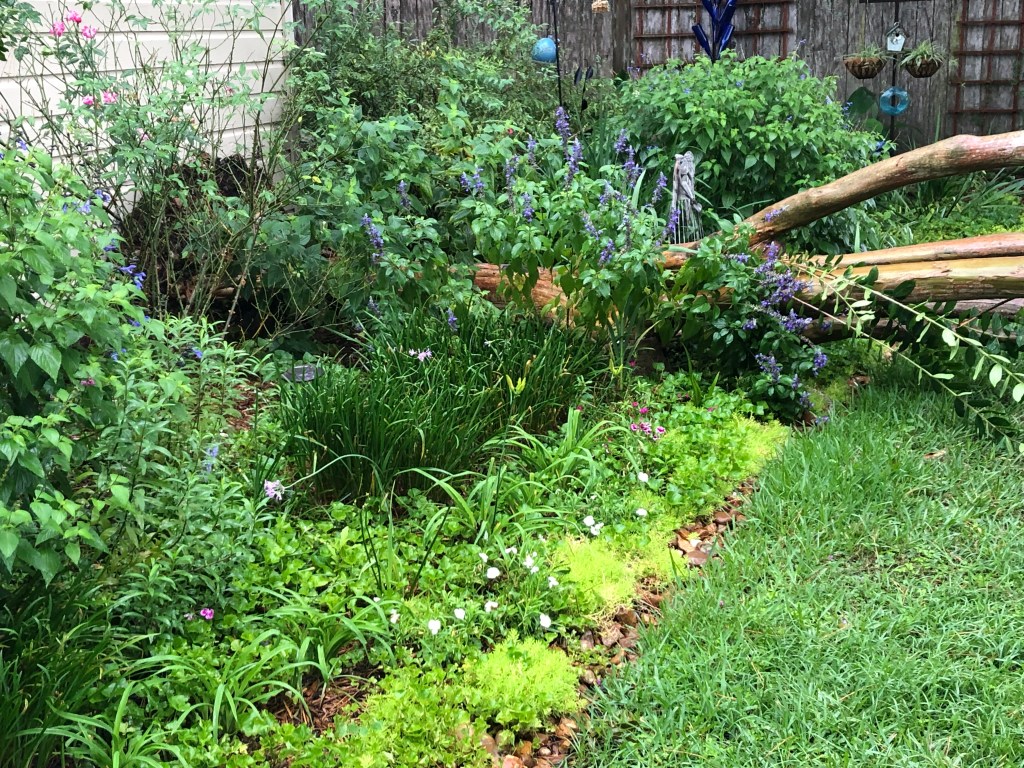
I ran to the back door and couldn’t believe the sight before my eyes. It seemed the 30-foot cinnamon-bark cultivar in our back yard had become uprooted and, like a tired horse at the end of a long race, simply laid itself down across the back yard.
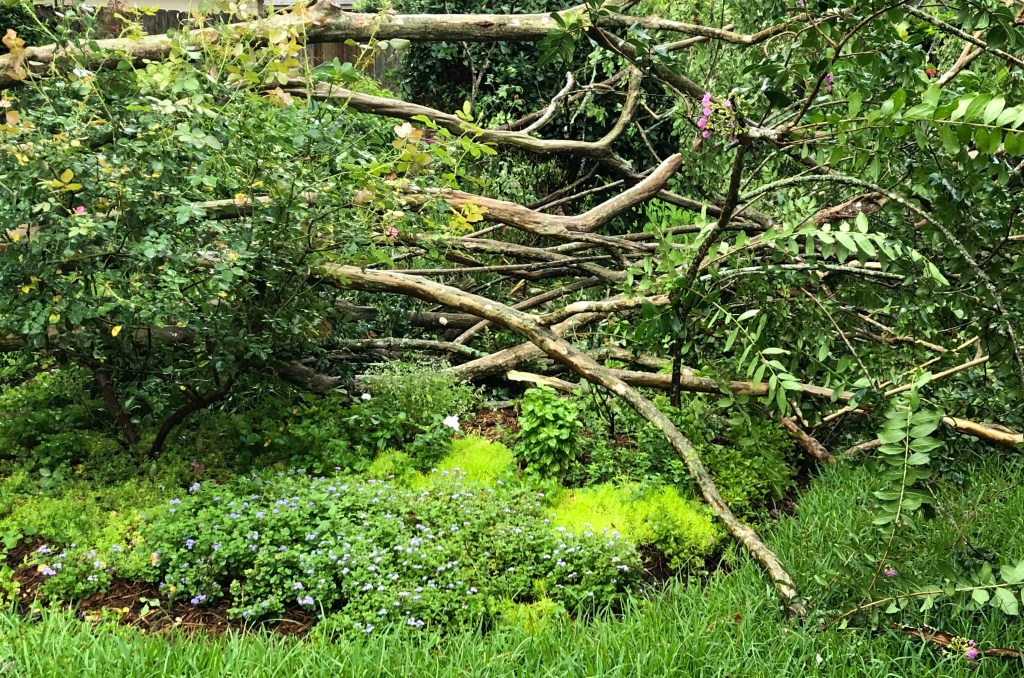
A central bed of roses and herbs cushioned the branches on their descent — explaining the lack of noise one would think a tree of such stature would make as it came crashing down.
In shock, I remembered that I had harvested three kinds of basil a couple of days prior. Good thing, as most of it, along with the other herbs, was suddenly inaccessible.
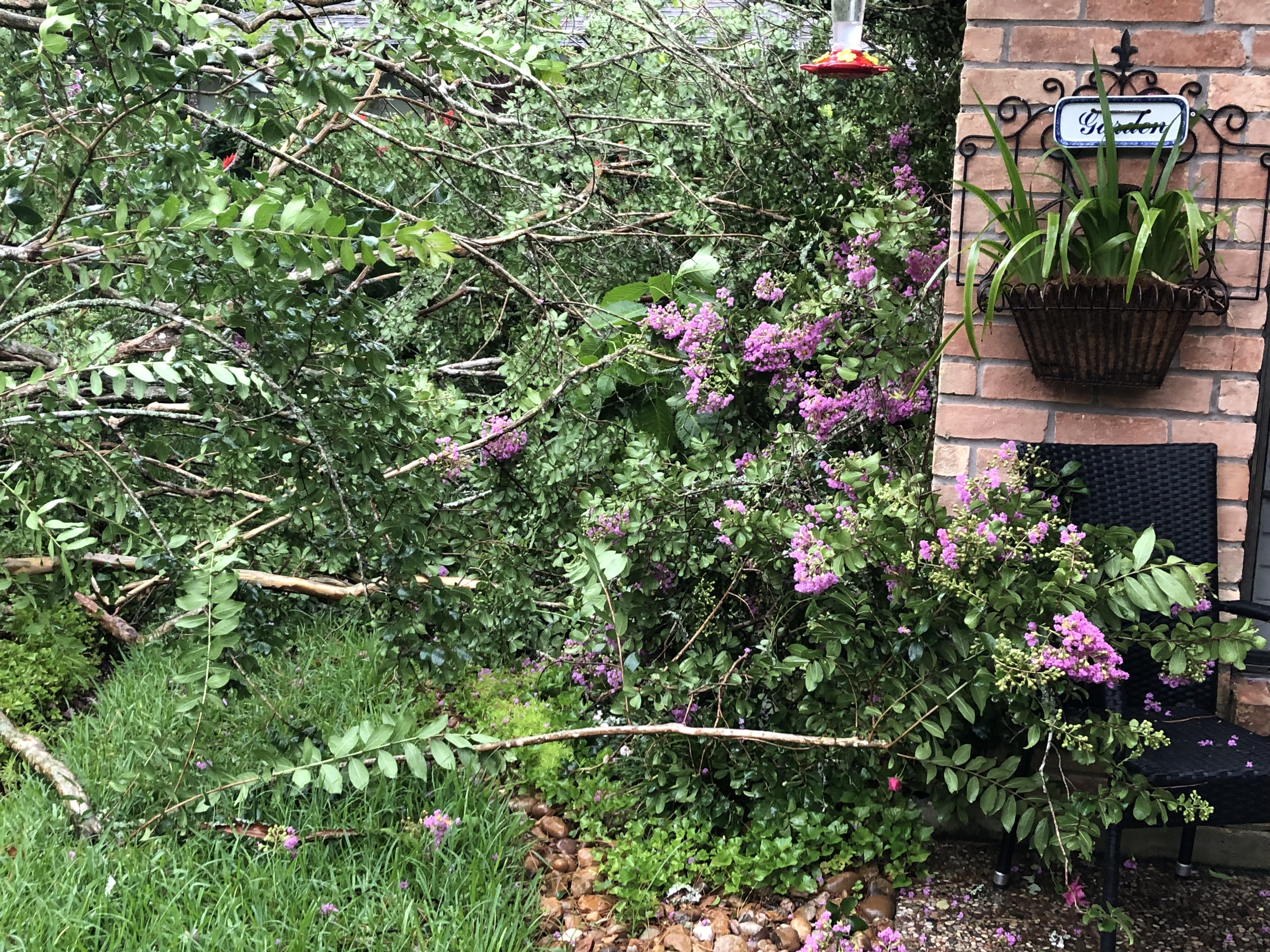
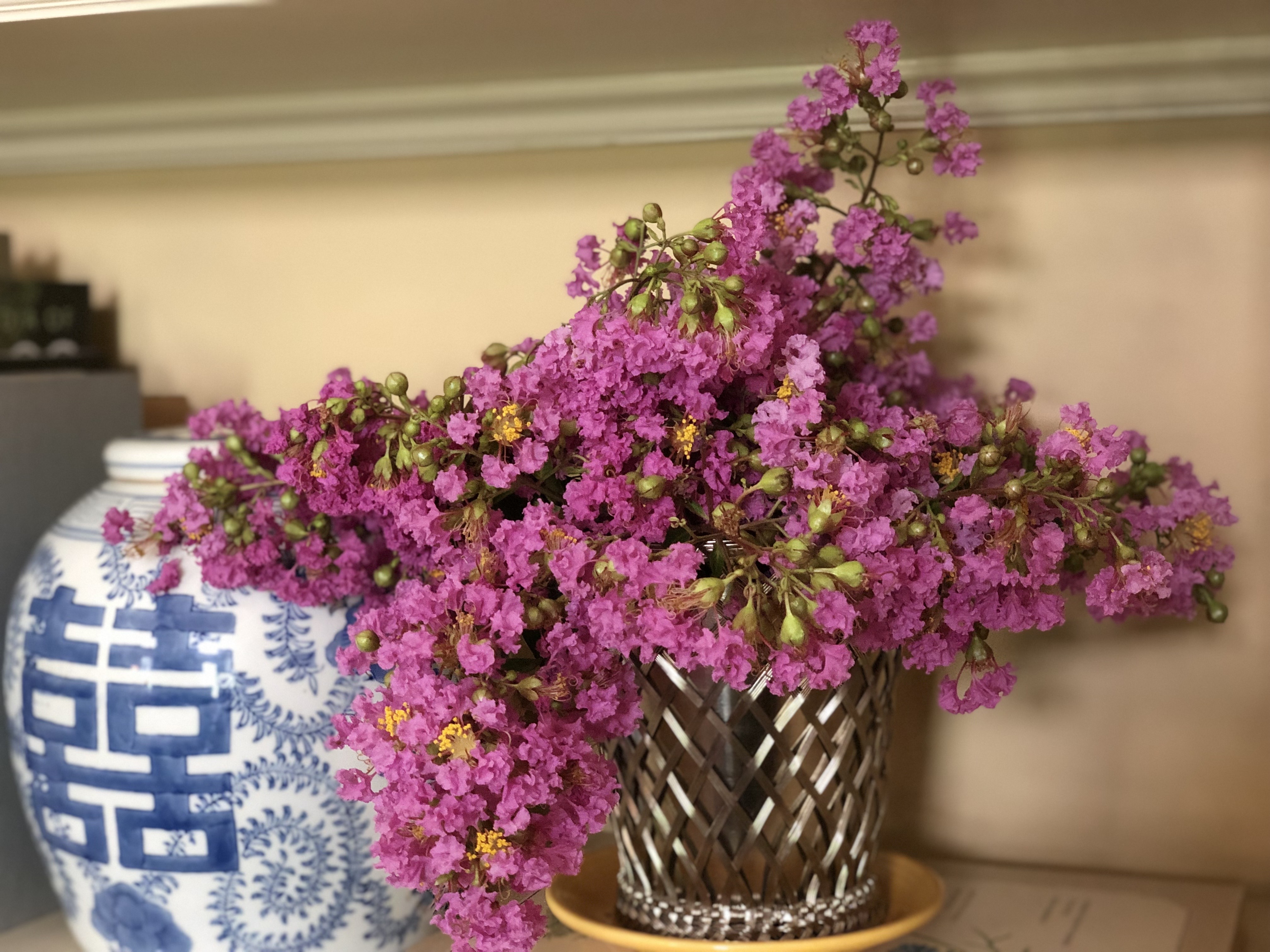
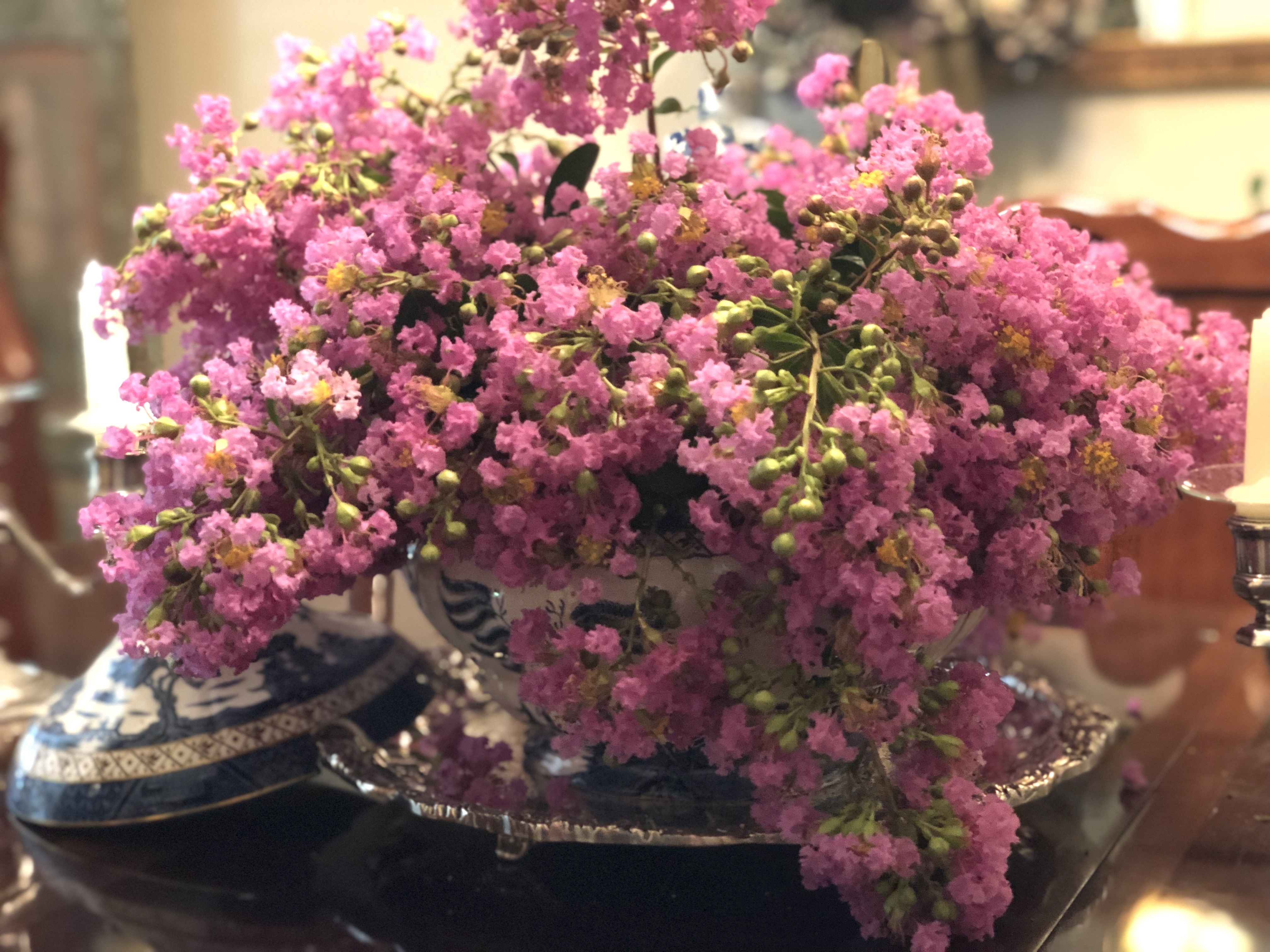
As I took in the rest of the surreal scene, I realized the back of the house was bathed in the crape myrtle’s lilac-pink blooms, usually too high to reach but now right there for the cutting. I grabbed the clippers and filled my arms with flowers to make arrangements as a homage to our fallen old friend.
As far as we know, it was planted in 1983, when the house was built. The owner of our tree service suggests it might be even older than that, perhaps a seedling on the lot before the house was built.
The day before the tree was cut into logs and hauled away, I made time to observe how nature was learning to adjust to its abruptly changed habitat. As usual, the garden taught me a thing or two about faith, patience and the ability to carry on when times aren’t especially easy.
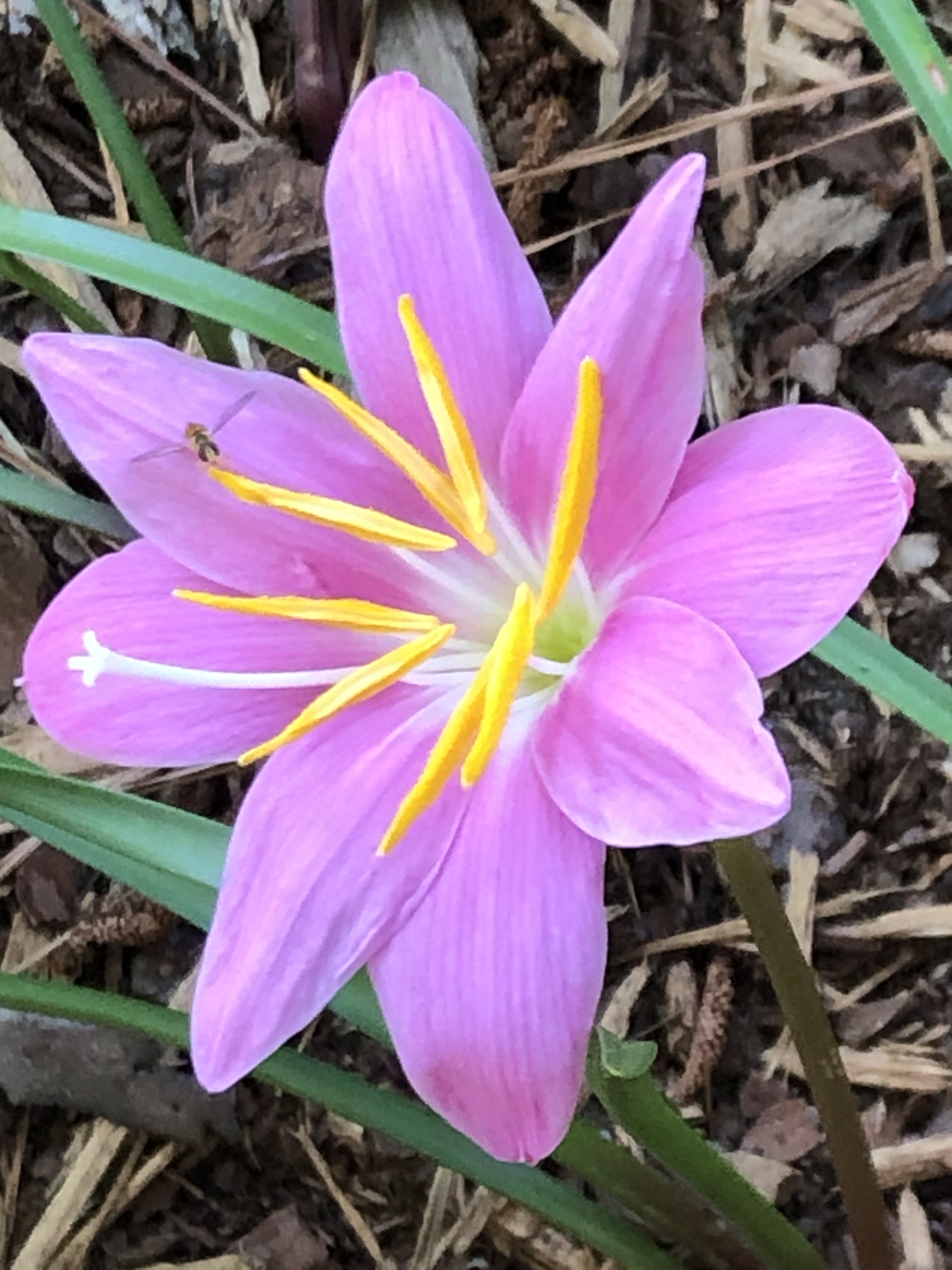
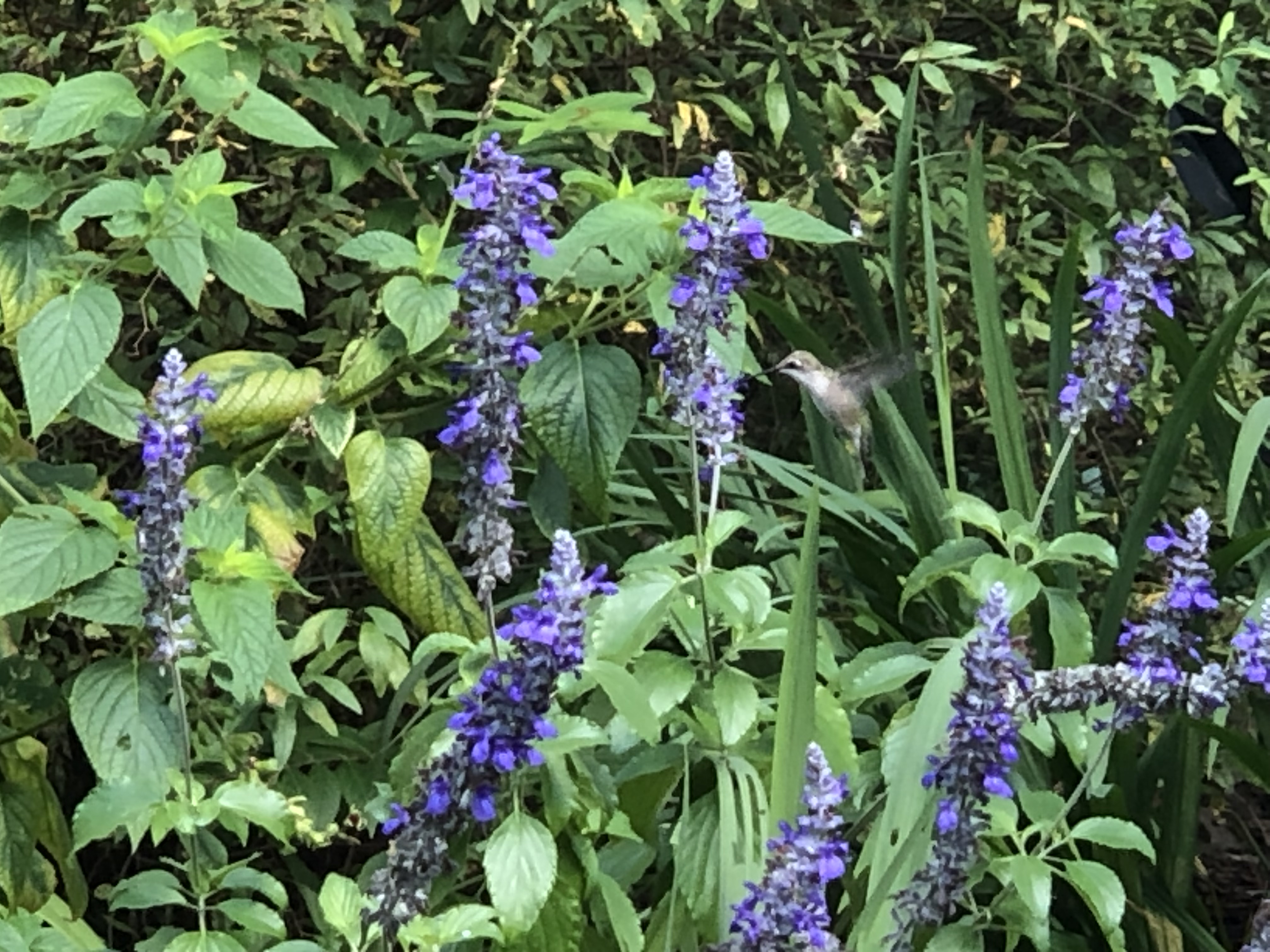
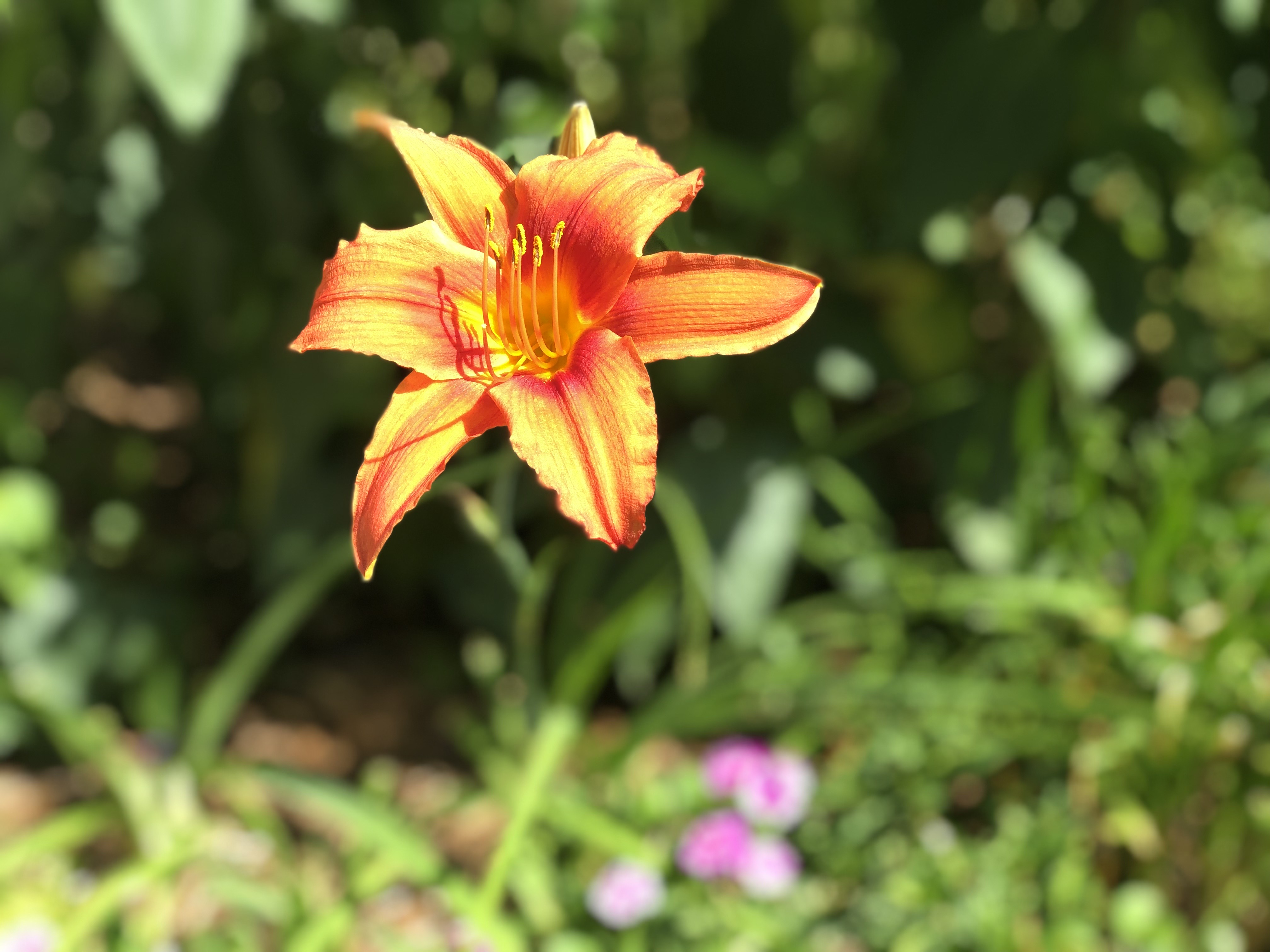
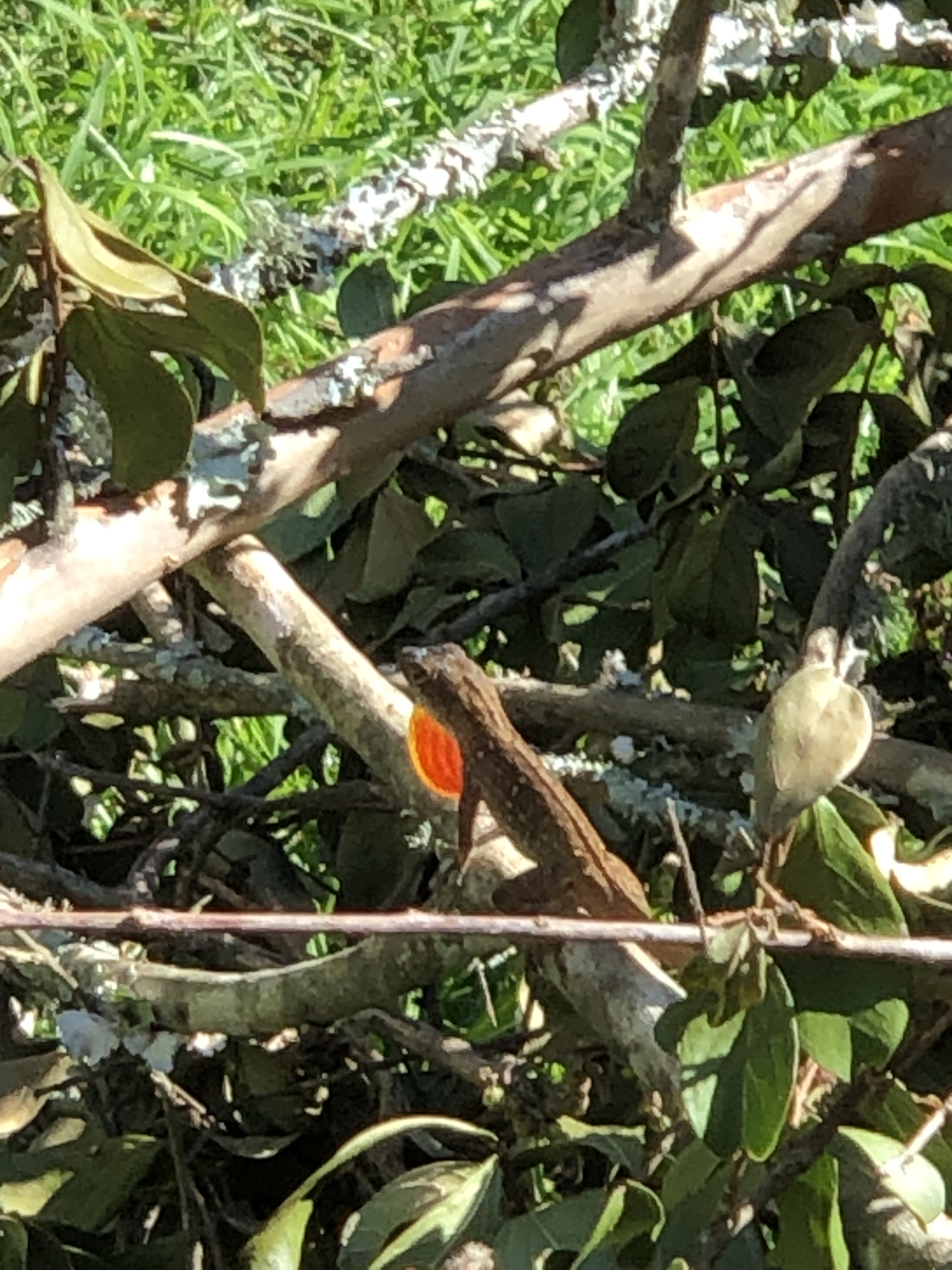
It was business as usual as a tiny bee gathered pollen from a rain lily from my great-grandmother’s garden and a hummingbird dropped by to drink the nectar of its favorite blue salvia. Nearby, an orange-red daylily my mother had given me long ago was blooming. A buddleia I’d been nursing along since the last hard freeze seemed unscathed, protected by a metal garden angel nearby. The antique roses would need some pruning but seemed amazingly unfazed. A pear tomato vine, a volunteer from the compost pile, was bent but bore three ripe little fruits ready to pick. A lizard was sunbathing on a pile of branches my husband had cut away to give a rose some breathing room. And the beautiful, smooth bark of the crape myrtle was now a makeshift paved expressway for the squirrels, offering an overpass across the rose garden and straight access to the garage, one exit away from the suet cakes they delight in stealing from the birds. The blue jays and cardinals were appreciating the extra perch as well. Everyone and everything seemed to be getting along just fine. It was going to be OK.
It’s been hard to say goodbye to our crape myrtle and its soaring, widespread branches. We saved a good portion of the trunk for woodworking projects. But we’re curious to see how our perennials, tomatoes, herbs and grass will respond now that there’s room for more sunlight to filter through. Who knows, maybe sometime in the future a root will awaken somewhere beneath the soil and, in time, we’ll watch a new tree rise up to the music of the rain.
And that will be something to sing about.


 Violets for the Soul
Leave a reply to Elizabeth nelson davia Cancel reply